Cambridge's Property Tax Rate Looks Lower Than Somerville's. The Full Bill Doesn't Agree.
September 17, 2026
September 17, 2026
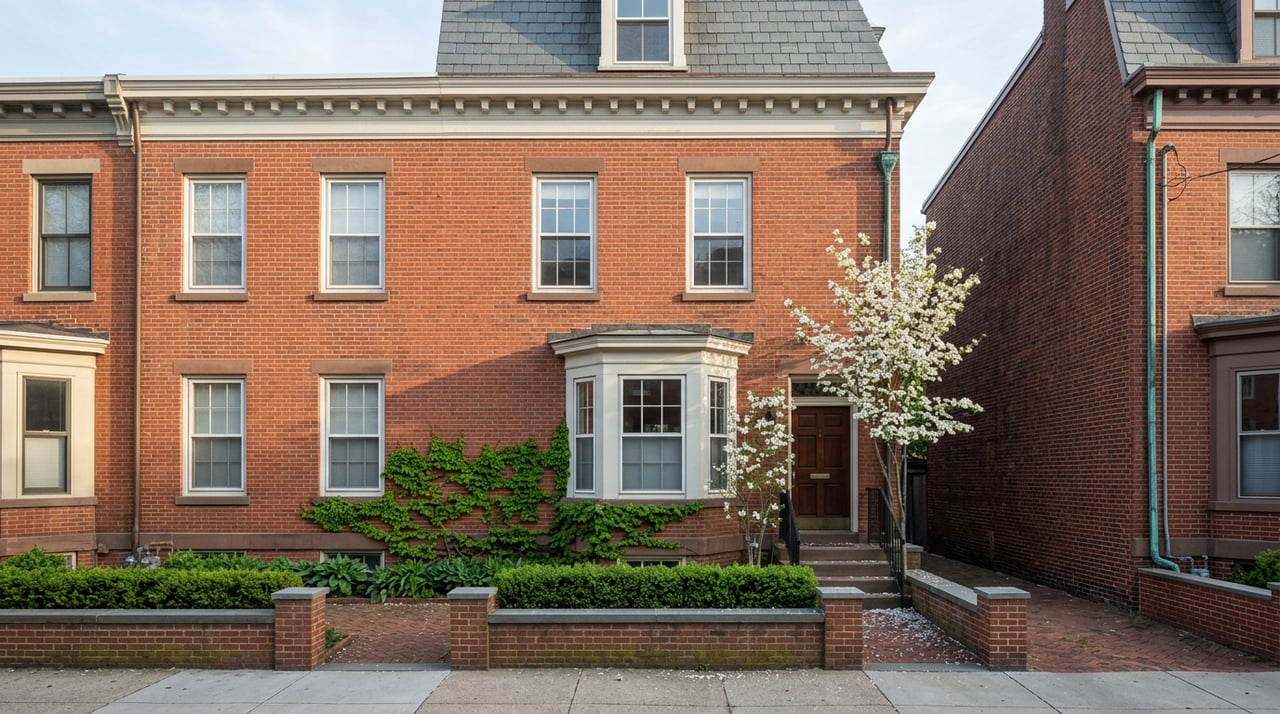
A buyer comparing a condo in Cambridge to a nearly identical one in Somerville usually starts with the assessor's website. They find Cambridge's residential tax rate for fiscal year 2026, the most recently certified rate for either city as of this writing: $6.67 per $1,000 of assessed value. Then they check Somerville and find $10.98 per $1,000, almost double. The conclusion writes itself: Cambridge is the tax bargain, Somerville is the expensive one, decision made.
That conclusion doesn't survive contact with the actual numbers.
The rate spread between these two cities isn't a verdict on which one costs less to own in. It's a symptom of who else is paying the bill.
Start with a clean comparison: an $800,000 condo, owner-occupied, in each city. That price sits comfortably inside the normal condo range in both markets, so it's not a stretch in either direction.
| Cambridge | Somerville | |
|---|---|---|
| FY2026 residential rate | $6.67 / $1,000 | $10.98 / $1,000 |
| Tax before exemption | $5,336 | $8,784 |
| Residential exemption savings | $3,403 | $4,578 |
| Net annual tax (approx.) | $1,933 | $4,206 |
Run the math and the owner-occupant in Somerville pays roughly $2,273 more per year than the Cambridge owner on an identically priced home, even after both cities apply their residential exemption. That's a real, sustained gap in carrying costs, not a rounding error.
Here's where it gets more complicated. Cambridge's citywide median sale price ran about $1.2 million for the three months ending July 2026, down 4.4 percent year over year, with homes selling in an average of 21 days. Somerville's condo median sat closer to $775,000 as of June 2026, with single-family homes at a $1,245,000 median. The $800,000 apples-to-apples comparison above is useful for isolating the rate effect, but it understates what a Somerville buyer is actually likely to spend, because the two cities aren't pricing the same product at the same level to begin with.
Cambridge's low residential rate isn't a policy favor to homeowners so much as a byproduct of what else is sitting on the tax rolls. The city's FY2026 commercial and industrial rate is $14.07 per $1,000, more than double the residential rate. That gap exists because Cambridge has an unusually large base of high-value commercial and institutional property to tax at that higher rate: Harvard, MIT, and a dense cluster of biotech and pharmaceutical tenants occupy real estate that generates enormous assessed value without needing a residential exemption of their own.
The practical effect for a homeowner is that Cambridge's residential rate functions almost like a leftover number. Once the commercial and lab-space tax base absorbs a large share of the levy at its own higher rate, the amount that has to come from owner-occupied homes shrinks. A homeowner in Cambridge benefits from a tax structure that was built around taxing someone else's real estate more heavily, not around giving residents a discount for its own sake.
Somerville runs the opposite structure. According to the city's own FY2026 property tax update, 81.3 percent of Somerville's parcels are residential. Each December, the Mayor and City Council hold a classification hearing where they can shift as much of the levy as state law allows from residential to commercial taxpayers. This year that shift brought the residential share of the levy down to 67.4 percent, even though residential parcels make up over four-fifths of the city.
In other words, Somerville is already doing the maximum it can to protect homeowners relative to its parcel mix. The problem is there isn't enough non-residential value in the city to absorb much more. Somerville doesn't have a Harvard or an MIT anchoring its tax base, so the burden that Cambridge spreads across research towers and lab buildings has to be carried by a city where four out of five properties are someone's house.
The residential exemption is Somerville's other lever, and it's the more generous one on paper. State law caps the exemption at 35 percent of the average assessed value of Class One residential parcels, and Somerville has a long history of setting its exemption at or near that ceiling, which is part of why it's regarded as one of the most generous residential exemptions in Massachusetts. For fiscal 2026 that translated to a $4,578 savings for a qualifying owner-occupant, compared to Cambridge's $3,403. That's a real advantage for anyone who qualifies. It just isn't large enough to close the gap created by a base rate that's $4.31 higher per $1,000 of value.
City-level averages flatten a lot of variation that actually matters to a buyer's monthly number.
In Somerville, one-bedroom condos in Davis Square carried a median price near $717,500 as of spring 2026, while the same product in Winter Hill priced closer to $496,000. That gap is large enough that a two-bedroom in Winter Hill or East Somerville can land in the $700,000 to $775,000 range, roughly where a one-bedroom in Davis Square already sits. Ball Square, Magoun Square, and Gilman Square have all picked up direct Green Line service through the Green Line Extension, which has strengthened values in those areas without pulling them fully up to Davis Square pricing yet.
Cambridge shows its own internal spread. North Cambridge posted a median sale price near $1.3 million as of May 2026, up 10.6 percent year over year, while Cambridgeport last posted a $1.6 million median in December 2025, making it one of the higher-priced close-in submarkets in the city. Both sit well above the $800,000 illustrative price used earlier in this piece, which is the point: the tax rate math holds at any price point, but the price point itself is doing most of the work in determining the actual bill.
There's also a version of this comparison that plays out literally at the city line. Cambridge Crossing, the mixed-use development built on the former NorthPoint rail yard near Lechmere, sits in East Cambridge close enough to Somerville and Charlestown that the surrounding blocks feel like one continuous neighborhood. Two buyers looking at similar buildings a few streets apart there are choosing between two different tax structures without necessarily registering that they've crossed a municipal boundary.
The residential exemption in both cities is not automatic, and it's not retroactive to your closing date. For the fiscal 2026 cycle, Somerville's assessing office required owning and occupying the home as a principal residence by January 1, 2025, with the application due April 1, 2026. Cambridge ran on that same April 1 deadline. Both cities repeat this pattern every year: a January ownership snapshot that sits well before the fiscal year even begins, followed by a spring filing window.
A buyer who closes in June will not have owned the home as of the prior January 1, which means no exemption on that first tax bill in either city, no matter how the math above works out. Somerville's City Council still has to vote on the fiscal 2027 exemption amount this December, so anyone closing later this year should confirm the current cycle's dates and figures directly with the assessor's office rather than assume the FY2026 numbers carry forward unchanged.
None of this means one city is the better buy. It means the headline rate answers a much narrower question than most buyers think it does. Cambridge's low residential rate reflects a commercial and institutional tax base most cities don't have. Somerville's higher rate reflects a city doing what it can with a base that's mostly residential to begin with, then using the exemption to soften the result. The number that actually matters is the net annual bill at the specific price point and submarket you're considering, not the rate printed on the assessor's page.
Does the residential exemption apply to a second home or a rental property? No. Both cities restrict the exemption to owner-occupied primary residences where the owner files a Massachusetts income tax return using that address.
If I buy in Somerville, is the total tax bill always higher than in Cambridge? Not necessarily. It depends on the assessed value of the specific property. Because Somerville's typical condo prices run below Cambridge's citywide median, a Somerville purchase can still produce a lower net tax bill in dollar terms, even at the higher rate, if the price gap is large enough.
Why doesn't Somerville just lower its residential rate to match Cambridge? The city already shifts as much of the levy onto commercial taxpayers as state law allows each year. Its options are constrained by how much non-residential value actually exists within its borders, which is a fraction of what Cambridge has in its lab, biotech, and university real estate.
If you're weighing a purchase across the Cambridge and Somerville line, or trying to figure out what a specific property's carrying costs actually look like once the exemption is applied, the Taylor Yates team can walk through the real numbers for the neighborhoods and price points you're considering. Request a complimentary concierge consultation and get a clear picture before you write an offer.
Stay up to date on the latest real estate trends.
October 8, 2026

Taylor Yates | October 5, 2026
October 1, 2026

Taylor Yates | September 28, 2026
September 24, 2026

Taylor Yates | September 21, 2026
September 17, 2026

Taylor Yates | September 14, 2026

September 10, 2026
We bring decades of experience to transactions large and small and treat every client with the high level of service they deserve. Whether your goal is to build, buy, or sell a home, I would be honored to serve and help you with your real estate needs!

426 Boston Post Rd. Weston, MA 02493