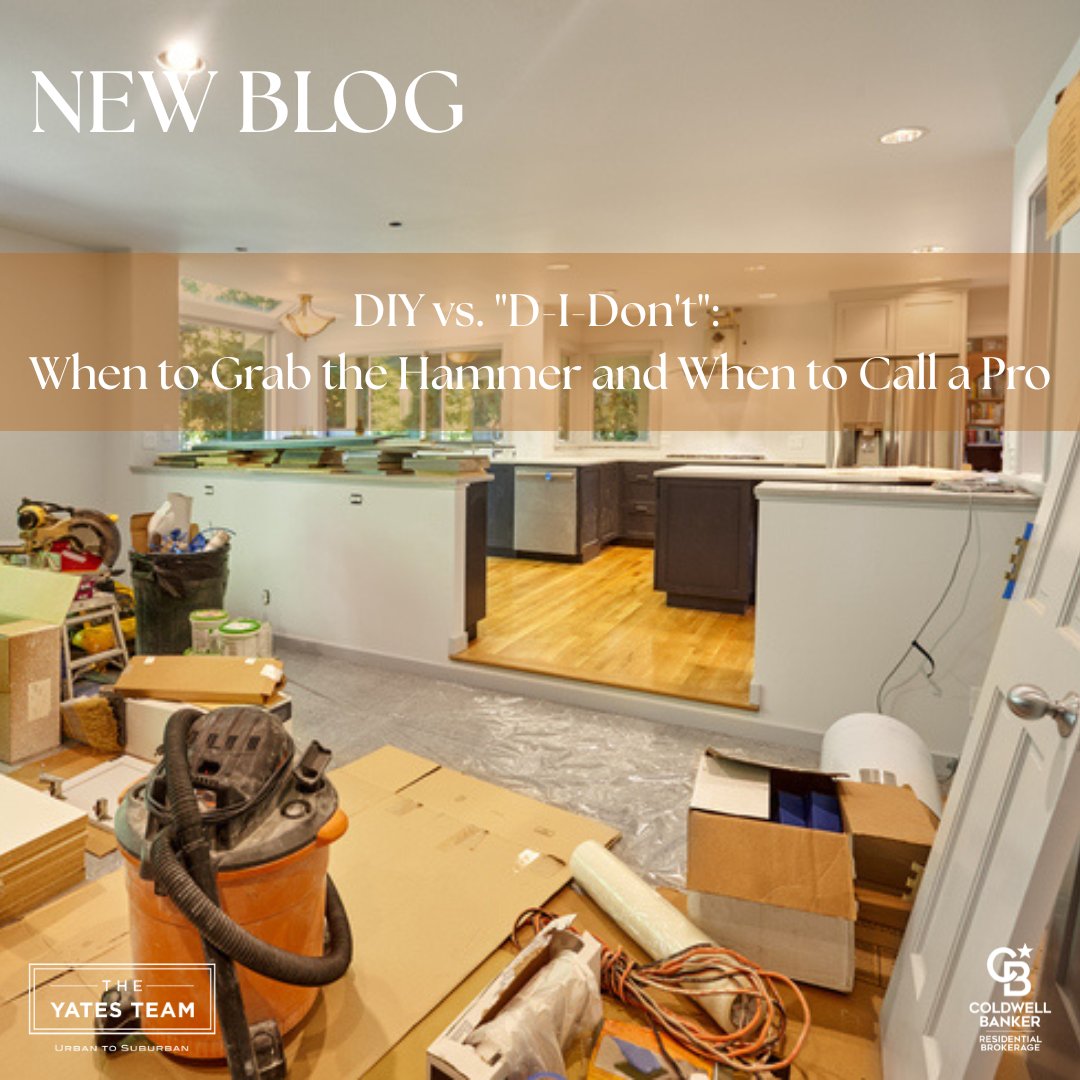
DIY vs. "D-I-Don't": When to Grab the Hammer and When to Call a Pro
Taylor Yates | April 6, 2026
Taylor Yates | April 6, 2026
We’ve all been there: staring at a leaky faucet or a Pinterest-perfect accent wall, thinking, "I could totally do that myself." But as any seasoned homeowner knows, there is a very fine line between a weekend win and a hardware store nightmare.
In this blog, we break down the high-stakes world of home improvement. We explore the psychological thrill of the "Do-It-Yourself" spirit and the cold, hard reality of when a project is better left to the professionals.
A poorly executed DIY project doesn't just look "rustic"—it can actually be a financial liability. During a home inspection, "handyman specials" act as red flags. If an inspector sees ungrounded outlets or amateurish tiling, they immediately wonder what else is hiding behind the drywall.
Permit Gaps: If you finished a basement without a permit, that square footage may not count toward your home's official value.
Remediation Costs: Buyers will often demand a credit to have a professional "undo" and "redo" your work, often at double the original cost.
Before you spend 15 hours watching YouTube tutorials, you need to calculate your Personal Labor Rate. A good rule of thumb? Take your professional hourly earnings and add a 30% "Frustration Tax."
If you earn $50/hour at your job, your DIY time is worth roughly $65/hour. If a professional contractor quotes you $500 for a job that will take you 20 hours of labor ($1,300 in "personal time"), you aren't saving money—you’re paying a premium to work on your day off.
Some projects aren't just about skill; they're about liability. To satisfy most homeowners' insurance policies and local building codes, the following usually require a licensed professional:
Main Electrical Panel Upgrades: DIY wiring can void fire insurance claims.
Gas Line Extensions: Any work involving combustible fuel is a high-risk "D-I-Don't."
Major Structural Alterations: Removing load-bearing walls without a structural engineer's stamp can lead to a policy cancellation if the roof sags.
Stay up to date on the latest real estate trends.

Taylor Yates | August 24, 2026
August 20, 2026

Taylor Yates | August 17, 2026
August 13, 2026

Taylor Yates | August 10, 2026

August 6, 2026

August 6, 2026

Taylor Yates | August 3, 2026

Taylor Yates | July 27, 2026
We bring decades of experience to transactions large and small and treat every client with the high level of service they deserve. Whether your goal is to build, buy, or sell a home, I would be honored to serve and help you with your real estate needs!

426 Boston Post Rd. Weston, MA 02493