East Side Or West Side? South Boston Micro-Market Guide
June 18, 2026
June 18, 2026
Trying to choose between South Boston’s East Side and West Side? It sounds simple until you start comparing real listings, commute needs, parking realities, and the kind of block you actually want to live on. If you are buying in South Boston, the better choice usually comes down to how you live day to day, not just which side sounds more appealing. This guide will help you understand the difference, weigh the tradeoffs, and focus on the details that matter most. Let’s dive in.
South Boston is a peninsula just south of Downtown Boston and east of the South End and Dorchester. Boston Planning and Development Agency materials describe it as a former industrial and working-class neighborhood that has become a highly desirable residential area, with much of its commercial activity centered around East and West Broadway.
That said, East Side and West Side are informal labels, not official neighborhood boundaries. They are best understood as shorthand for different block patterns, housing types, and lifestyle preferences. For buyers, that means you should treat the split as a useful guide, but not a hard rule.
It also helps to separate this conversation from the Seaport and South Boston Waterfront. Boston Planning treats those as adjacent but distinct areas, so an East Side versus West Side comparison works best when you stay focused on the residential core of South Boston itself.
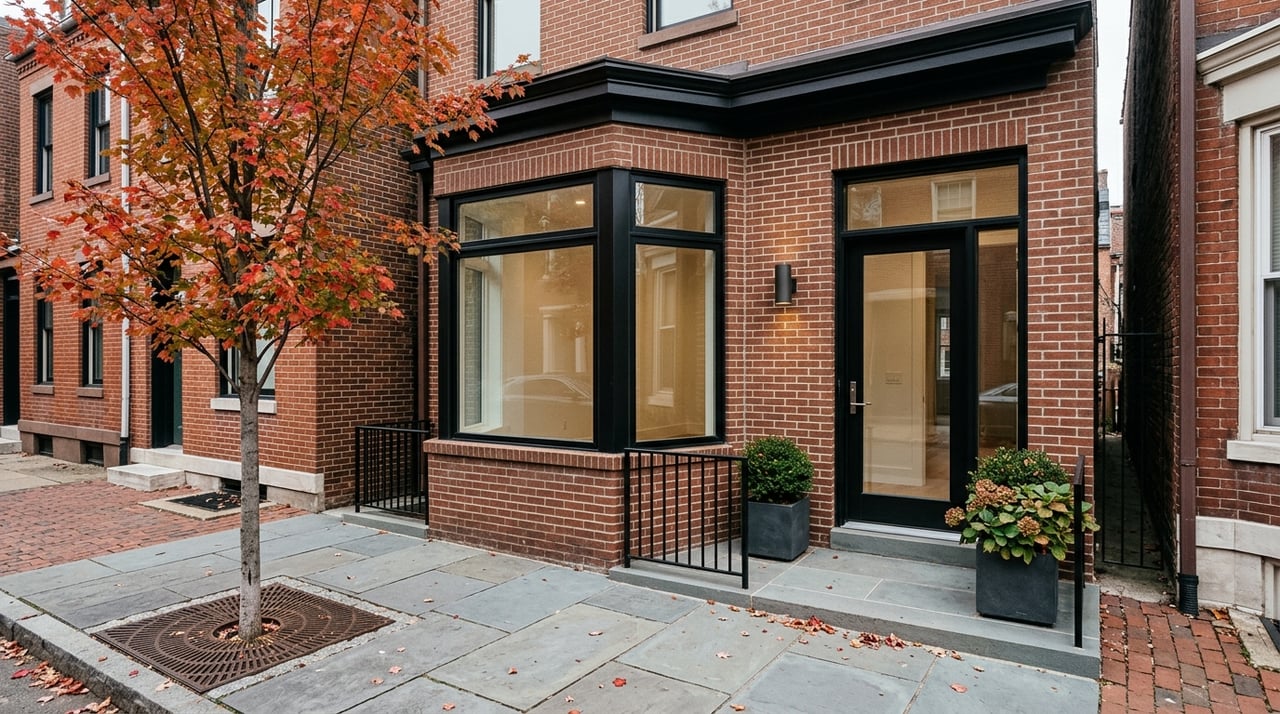
The East Side often appeals to buyers who want a more residential feel and easier access to shoreline amenities. Along East Broadway, especially from L Street to Farragut Road, planning data points to mostly low-density residential blocks, wider sidewalks, mature street trees, and direct connections to open space.
That setting helps explain why East Side listings often highlight proximity to Castle Island, Carson Beach, M Street Beach, Pleasure Bay, Evans Field, and Medal of Honor Park. If your ideal routine includes walks by the water, outdoor space, or a quieter street presence, the East Side may feel like a better fit.
Housing on the East Side often includes older condo-conversion stock, renovated homes, and some newer units mixed in. Recent examples from the research show how varied that product can be. A new four-bedroom condo at 587 E Broadway #3 sold for $1.1 million in December 2025, while 883 E Broadway #1 sold for $930,000 in May 2026 as a two-bedroom condo with a private yard and close access to beach and park amenities.
The West Side tends to feel more convenience-driven, especially around the Broadway corridor. West Broadway is one of South Boston’s main commercial hubs, and the broader area often attracts buyers who want transit access, dining, and larger condo buildings with more built-in amenities.
Planning data shows West Broadway as a mixed-use corridor with one travel lane in each direction, 21 bus stops, and no subway station directly on the street itself. Even so, the area benefits from access to Broadway and Andrew stations, along with bus and Silver Line connections that support movement through South Boston and into the city.
Listings on the West Side often emphasize easy access to the Red Line, retail, dining, and the Harborwalk. They may also feature elevator buildings, concierge service, fitness centers, pools, rooftop terraces, and garage parking. In the research examples, 9 West Broadway #402 is marketed as a loft with concierge, fitness center, pool, rooftop terrace, garage parking, and Red Line access, while 170 W Broadway #308 sold in January 2026 in a newer elevator building with garage parking.
One of the biggest mistakes buyers make is assuming East Side means one thing and West Side means another in every case. In reality, South Boston varies block by block, and product type often matters as much as location.
South Boston’s 2025 profile shows 20,251 housing units, with 54.0% renter occupancy. The housing mix is led by two-bedroom homes at 44.6%, followed by three-bedroom or larger homes at 30.0%. That helps explain why the area works for both condo buyers seeking efficiency and households looking for more space.
If you are comparing two listings, the details may outweigh the side of the neighborhood. A renovated brownstone-style condo, a newer elevator building, a roof deck, a private yard, deeded parking, or higher HOA fees can all shift value in a meaningful way.
South Boston remains a competitive, high-price condo market. Public data sources in the research report vary by methodology, but they all place the neighborhood around the low-$1 million range.
Zillow shows an average home value of $896,280 and says homes go pending in about 21 days. Redfin reports a median sale price of $1.1 million last month, while Realtor.com reports a median sale price of $1.045 million and a broader median listing price of $1.17 million. The exact number changes by source, but the takeaway is consistent: buyers should expect a fast-moving and expensive market.
At the micro-market level, price per square foot examples show why broad assumptions can be misleading. The East Side examples in the research sold around $808 to $868 per square foot, while the West Broadway examples ranged from about $776 per square foot on an amenity-rich active listing to roughly $904 per square foot on a recent sale. Those numbers are not direct comps, but they illustrate how building age, parking, amenities, and fees can influence pricing faster than an East versus West label.
In South Boston, parking is not a minor detail. It can affect your budget, convenience, and long-term satisfaction with a purchase.
According to BPDA transportation planning data, South Boston has close to 20% of all residential vehicle permits in Boston, about three permits for every parking space, and 60% of households have more than one permit. That is a strong signal that parking supply is tight and demand is high.
For buyers, this means deeded or garage parking can carry real value. If you own a car or expect regular guests, parking should be part of your first-pass search criteria, not an afterthought once you fall in love with a unit.
The East Side often makes sense if your priorities center on open space, waterfront access, and a more residential street feel. You may be drawn to lower-density blocks, outdoor recreation, or homes that feel a bit more tucked into the neighborhood fabric.
The West Side may be a stronger fit if your routine depends on quick transit connections, nearby dining, and a more amenity-rich building style. If you want an elevator building, garage parking, or a location that feels more plugged into South Boston’s commercial spine, the West Side may check more boxes.
Neither choice is universally better. The smarter question is: Which side supports your routine with less friction? That is often where the right answer becomes clear.
If you are actively touring or searching online, use this framework to compare East Side and West Side listings:
This approach keeps you focused on how a home functions, not just how it is labeled in a listing description.
Because the East Side versus West Side split is informal, broad advice only goes so far. A great block on one side may suit you better than an average block on the other. In South Boston, exact street, building style, parking setup, and amenity package can shape value more than the neighborhood shorthand.
That is especially true for busy professionals, relocators, and sight-unseen buyers who need clarity fast. A data-driven, block-level review can help you avoid overpaying for the wrong feature set and move quickly when the right property appears.
South Boston offers strong demand, a housing mix that supports different lifestyles, and a location that continues to attract condo buyers. The key is matching your budget and priorities to the right micro-market, then narrowing even further to the street and building level.
If you are weighing the East Side against the West Side, a clear strategy can save time and make your decision feel much more confident. To talk through your search with a concierge, data-driven approach, request a complimentary consultation with Taylor Yates.
Stay up to date on the latest real estate trends.
July 9, 2026
Taylor Yates | July 6, 2026
July 2, 2026
June 25, 2026

Taylor Yates | June 22, 2026
June 18, 2026
Taylor Yates | June 15, 2026
June 11, 2026

Taylor Yates | June 8, 2026
We bring decades of experience to transactions large and small and treat every client with the high level of service they deserve. Whether your goal is to build, buy, or sell a home, I would be honored to serve and help you with your real estate needs!

426 Boston Post Rd. Weston, MA 02493