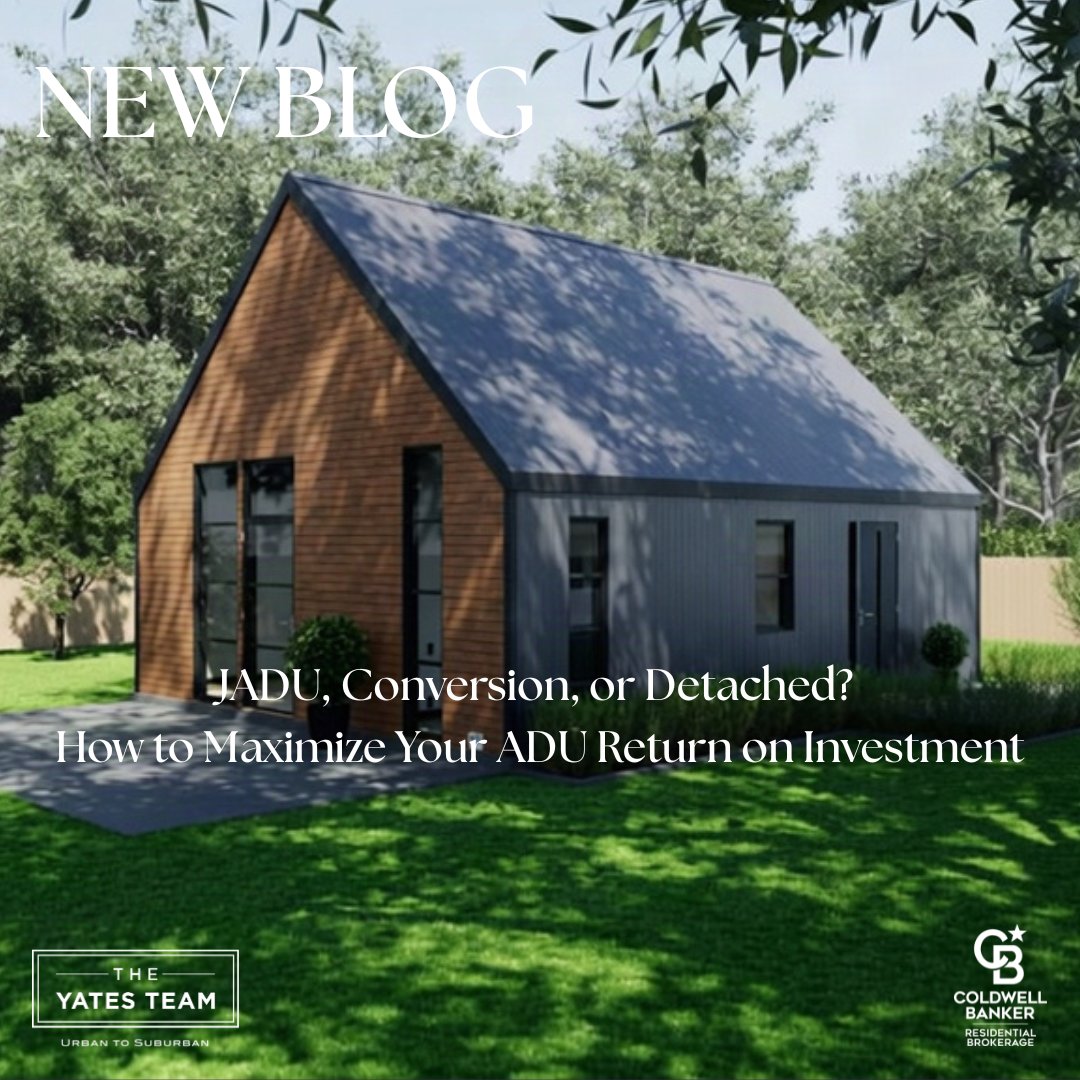
JADU, Conversion, or Detached? How to Maximize Your ADU Return on Investment
Taylor Yates | October 19, 2026
Taylor Yates | October 19, 2026
Adding extra living space to your property is one of the most effective strategies to build equity and generate passive rental income. However, choosing between a Junior Accessory Dwelling Unit (JADU), a garage conversion, or a fully detached new build requires understanding how upfront costs, timelines, and space trade-offs shape your net return on investment (ROI).
When evaluating a garage conversion against a ground-up detached ADU, the decision boils down to initial efficiency versus total long-term value.
Because a garage conversion reuses an existing foundation, roofline, and exterior walls, it cuts construction costs by 40% to 50% compared to new construction. Permitting and build timelines are significantly faster, allowing you to lease the unit sooner and accelerate your cash flow breakeven point.
Conversely, detached builds command 15% to 30% higher monthly rents due to tenant privacy, separate entrances, and custom layouts. While the initial payback period takes longer, a detached build adds significantly higher absolute value to your long-term appraisal and total property equity.
Carving out a Junior ADU (JADU)—a unit up to 500 square feet created strictly within the existing footprint of the main home—is the superior strategy in several specific scenarios:
Strict Capital Constraints: JADUs are the most cost-effective path to rental income, often costing $30,000 to $80,000 since they leverage existing HVAC, plumbing runs, and interior walls.
Tight Yard or Zoning Restrictions: If local setback rules, floor-area ratios (FAR), or small lot sizes make a detached build impossible, a JADU bypasses exterior footprint limits.
Multigenerational Living: For aging parents or adult children, JADUs provide connected proximity while maintaining independent living space (and can legally share a bathroom with the main home to reduce plumbing costs).
Note: In many jurisdictions, JADUs require owner-occupancy in either the primary residence or the JADU, making them ideal for resident homeowners rather than absentee landlords.
A common concern among homeowners is how losing a garage affects property resale value. The overall impact depends heavily on your local real estate market:
Urban & High-Demand Rental Markets: In dense urban areas where square footage commands a massive premium, converting a garage into permitted Gross Living Area (GLA) almost always increases total market value by 10% to 30%. The added liveable space and rental income potential far outweigh the loss of covered parking.
Suburban, Parking-Scarce Neighborhoods: In suburban submarkets where buyers expect a two-car garage, eliminating covered parking can slightly narrow your buyer pool or reduce the main house's appraisal baseline.
Value Optimization Tip: To preserve maximum resale value, ensure the conversion is fully permitted. Unpermitted conversions risk zero appraised value or costly buyer concessions. Additionally, mitigate the loss of utility by adding dedicated driveway parking and integrated storage solutions (such as a shed or built-in exterior closets) elsewhere on the lot.
Stay up to date on the latest real estate trends.

Taylor Yates | November 9, 2026
November 5, 2026

Taylor Yates | November 2, 2026
October 29, 2026

Taylor Yates | October 26, 2026
October 22, 2026
Taylor Yates | October 19, 2026
October 15, 2026
Taylor Yates | October 12, 2026
We bring decades of experience to transactions large and small and treat every client with the high level of service they deserve. Whether your goal is to build, buy, or sell a home, I would be honored to serve and help you with your real estate needs!

426 Boston Post Rd. Weston, MA 02493