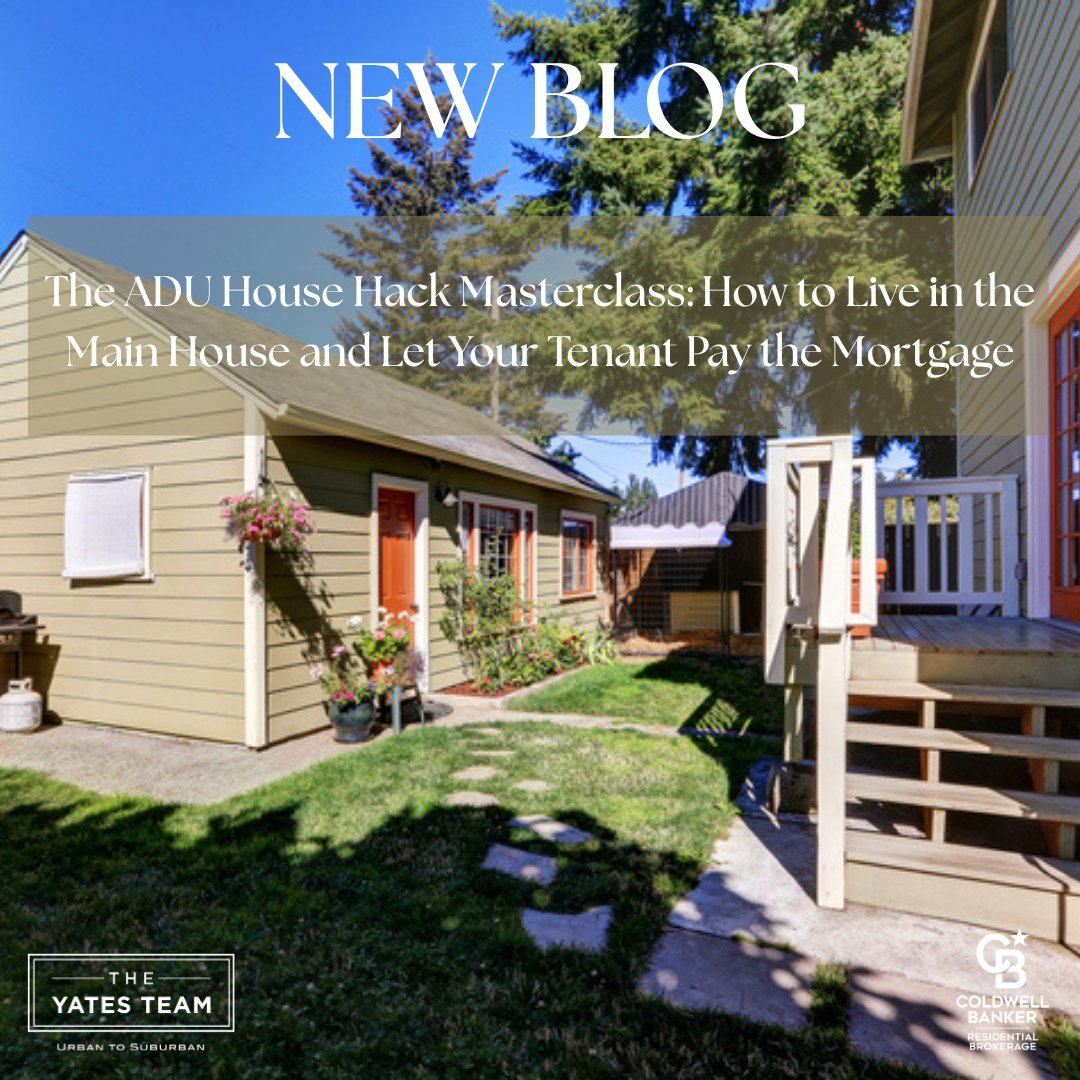
The ADU House Hack Masterclass: How to Live in the Main House and Let Your Tenant Pay the Mortgage
Taylor Yates | October 12, 2026
Taylor Yates | October 12, 2026
Homeownership remains one of the fastest paths to long-term wealth, but high housing costs often stretch monthly budgets thin. Traditional house hacking typically requires sacrificing comfort—sharing kitchens or squeezing into a basement.
An Accessory Dwelling Unit (ADU) changes the game. By renting out a secondary dwelling while living in the primary home, you can offset your mortgage without sacrificing your lifestyle.
Imagine buying a single-family home with a detached ADU for $500,000. Your total monthly payment—principal, interest, taxes, and insurance (PITI)—is roughly $3,200.
By collecting $2,000 per month from your ADU tenant, your net housing cost drops to just $1,200. In high-demand markets, short-term rentals can cover 100% of your mortgage, letting you live virtually free.
Living on the same physical lot as your tenant requires clear, professional boundaries to avoid uncomfortable dynamic shifts:
Digital-First Communication: Enforce a strict "no knock" policy for routine matters. All maintenance requests, rent payments, and non-emergency communications should go through an online portal or email.
Define "Emergencies": Clearly outline in the lease what constitutes an immediate emergency (e.g., active water leaks) versus a routine fix handled during business hours.
Treat It Like a Business: Maintain professional distance. Avoid casual drop-ins or over-familiarity, which makes enforcing lease terms difficult later.
Preserving visual and physical privacy keeps both parties happy long-term:
Driveways & Parking: Assign specific, non-overlapping parking spots. If space allows, create a dedicated gravel or paved pad for the ADU to keep the main driveway clear.
Yards & Outdoor Living: Install physical dividers—like cedar fencing, privacy screens, or dense hedges—to split the lot into two distinct private yards.
Trash & Utilities: Set up a designated enclosure for separate trash bins. Sub-meter electric and water utilities during construction so billing remains completely automated and transparent.
Renting an ADU brings significant financial perks alongside a few tax complexities:
Tax Advantages: You can write off a proportional percentage of shared household expenses, including property taxes, mortgage interest, homeowners insurance, and utility bills. Direct maintenance costs for the ADU are 100% tax-deductible, as is building depreciation.
Tax Complications: Depreciation lowers your taxable income today, but it triggers depreciation recapture tax when you sell the property. Furthermore, converting part of your primary residence into an income-producing rental can impact your eligibility for the full $250,000/$500,000 Section 121 capital gains exclusion upon sale.
Consult a qualified CPA early on to structure your rental income correctly and maximize your tax efficiency.
Stay up to date on the latest real estate trends.
Taylor Yates | October 12, 2026
October 8, 2026
Taylor Yates | October 5, 2026
October 1, 2026

Taylor Yates | September 28, 2026
September 24, 2026

Taylor Yates | September 21, 2026
September 17, 2026
Taylor Yates | September 14, 2026
We bring decades of experience to transactions large and small and treat every client with the high level of service they deserve. Whether your goal is to build, buy, or sell a home, I would be honored to serve and help you with your real estate needs!

426 Boston Post Rd. Weston, MA 02493