South Boston Or Somerville? Choosing Your First City Home
June 4, 2026
June 4, 2026
Trying to choose between South Boston and Somerville for your first city home? You are not alone. Many first-time buyers want a neighborhood that fits both today’s budget and tomorrow’s lifestyle, and the right answer often comes down to how you want to live day to day. If you are weighing price, transit, housing style, and long-term practicality, this guide will help you compare your options with more clarity. Let’s dive in.
If you want the short version, East Somerville is the clearest lower-entry-price option in this comparison. In April 2026, East Somerville’s median sale price was about $859,680, compared with about $1,060,606 in South Boston. That pricing gap can make a meaningful difference when you are trying to balance down payment, monthly payment, and the kind of home you can realistically buy.
South Boston sits in the middle ground. It is still expensive, but it is more accessible than Cambridge, where the median sale price reached about $1,184,388 in April 2026. For many buyers, that puts South Boston in a practical sweet spot if you want a Boston address, strong neighborhood identity, and easier access to the waterfront.
Cambridge-side neighborhoods remain the premium option. They offer dense transit access, major commercial centers, and a highly competitive market. If your top priority is being close to the broadest transit and amenity network, you may decide the higher price is worth it.
The numbers tell a helpful story. East Somerville was somewhat competitive in April 2026, with homes taking about 57 days to sell and a 97.3% sale-to-list ratio. That suggests buyers may find a bit more breathing room there than in some nearby markets.
South Boston was also somewhat competitive, with a median sale price of about $1.06 million, around 42 days on market, and a 98.1% sale-to-list ratio. It moves faster than East Somerville, but not as quickly as Cambridge. That can matter if you are trying to plan your first purchase without feeling rushed at every turn.
Cambridge was the fastest and priciest of the three, with homes averaging about 25 days on market and selling at roughly 101.2% of list price. For first-time buyers, that often means more competition, less room to negotiate, and a higher bar for monthly affordability.
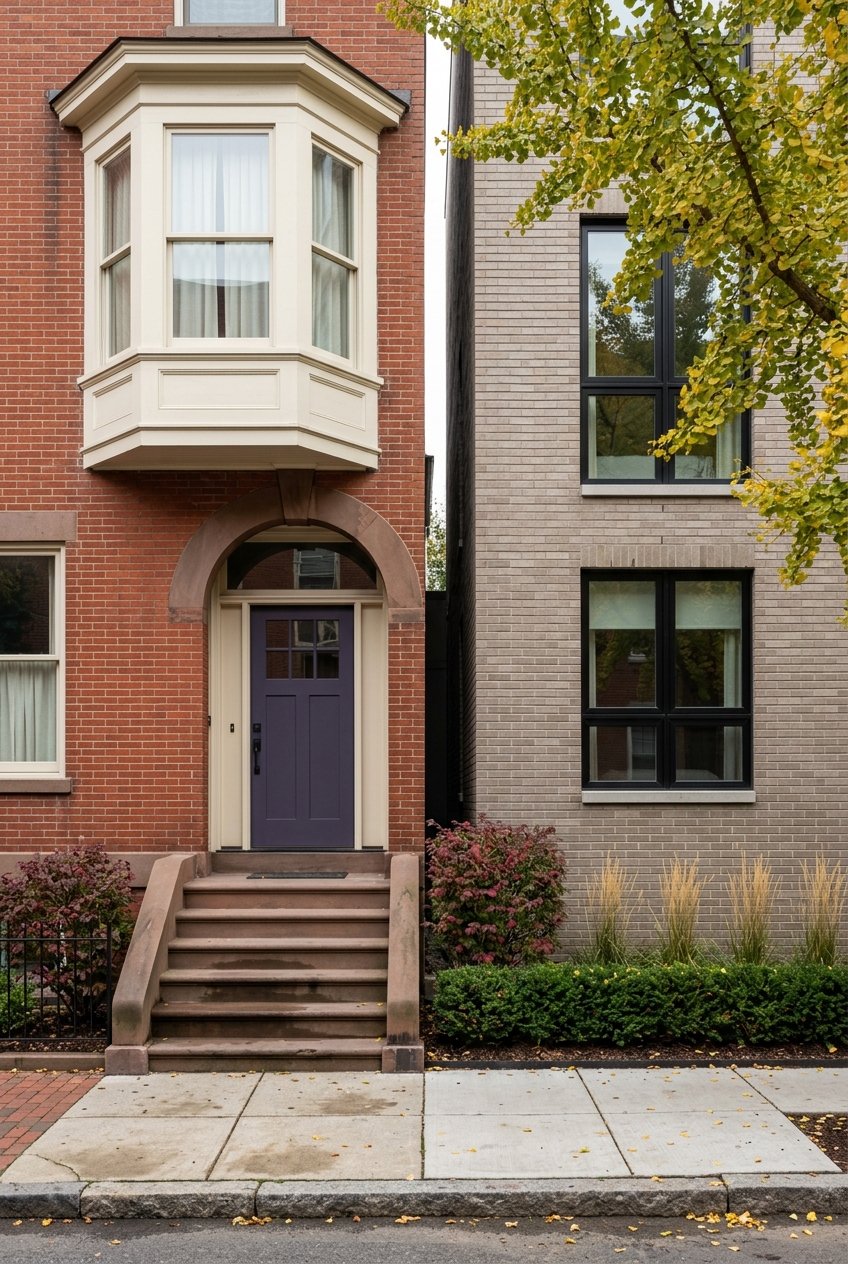
Price matters, but so does housing type. In South Boston, detached houses are rare, and the area is dominated by triple-deckers and attached rowhouses. For a first-time buyer, that often means your search may focus on condos, units in smaller multi-family buildings, or attached homes with urban layouts.
Somerville offers a broader mix of housing stock. The city’s housing includes apartment buildings, triple-deckers, single-family homes, and condominiums. That variety can open up more paths for buyers who are flexible about layout, building type, or renovation level.
If you are looking along the Cambridge side, expect dense mixed-use districts rather than purely residential blocks. In places like Harvard Square, Central Square, and Kendall Square, housing is closely tied to shops, restaurants, and commercial activity. That can be a big plus if you want a highly active environment, but it usually comes with a higher price tag.
South Boston has a distinct identity shaped by its history, traditions, beaches, and waterfront. Boston describes it as an urban neighborhood with a strong sense of history and tradition, and areas like Fort Point add an arts-focused dimension. If you want a neighborhood that feels rooted and recognizable, South Boston often stands out.
East Somerville feels more local and neighborhood-scaled. The city highlights events and initiatives like Carnaval, the Foodie Crawl, and This Is East, which point to a commercial area with its own personality rather than a polished downtown feel. For many first-time buyers, that creates a sense of everyday livability that feels approachable.
Cambridge-side squares are the most active and amenity-dense. Harvard Square blends history, arts, entertainment, restaurants, and shops. Central Square functions as a traditional downtown, while Kendall Square combines housing, restaurants, shops, and a major employment base.
Your commute and daily routines can be just as important as purchase price. East Somerville has a strong case for buyers who want a car-light lifestyle. The Green Line Extension and Community Path are open, and East Somerville scores very well for walkability and bikeability, with a walk score of 90 and a bike score of 89.
Cambridge is the most transit-dense option in the group. The city has 27 MBTA bus routes, a commuter rail station, and six MBTA Red and Green Line stations. If you want the broadest network and the easiest access to major employment and activity centers, Cambridge is hard to beat.
South Boston is a little different. Its convenience is more corridor-based, with Broadway Station serving as a core neighborhood node, plus waterfront connections that include a commuter ferry link to North Station. For some buyers, that setup works very well. For others, it may feel less flexible than the broader transit grid you get in Somerville or Cambridge.
When you buy your first city home, you are not just choosing a place to live now. You are also choosing a location that should support your plans over the next several years. That is why it helps to look beyond price and think about durability, demand, and the practical costs of ownership.
East Somerville has a compelling long-term story because it combines a lower entry point with improving transit access. The Green Line Extension and Community Path strengthen day-to-day mobility, which can support demand over time. If you want to enter the market at a lower price while still staying connected, East Somerville deserves a close look.
South Boston’s long-term appeal is closely tied to its waterfront identity, neighborhood recognition, and established housing stock. At the same time, Boston identifies South Boston’s waterfront as a coastal resilience focus area, and Redfin flags a 19% severe flood risk over the next 30 years, along with major wind and heat exposure. That does not make it a no-go, but it does mean you should pay close attention to elevation, building condition, insurance, and any mitigation features.
East Somerville also calls for climate review. Redfin flags a 22% severe flood risk over the next 30 years there, plus major wind and heat exposure. In both neighborhoods, a smart first-time buyer should look carefully at building-level details rather than assuming all homes in the area carry the same risk.
There is no single winner, only the best fit for your goals. East Somerville is strongest if you want the lowest entry price in this comparison, improving transit, and a neighborhood feel that is rooted and local. It can be especially appealing if you are trying to get into the market without stretching all the way to South Boston or Cambridge pricing.
South Boston may be the right move if you want a Boston neighborhood with strong identity, waterfront access, and housing that often centers on condos, triple-deckers, and rowhouse-style living. It tends to work well for buyers who value a middle-ground price point and a lifestyle shaped by specific neighborhood corridors.
Cambridge-side neighborhoods make the most sense if you are willing to pay more for the densest transit and amenity network. If being close to major squares, job centers, and mixed-use activity is your top priority, the premium may feel justified.
If you are still deciding, use this simple framework when touring homes and comparing neighborhoods:
The best first purchase is not always the one with the flashiest address. It is the one that fits your finances, supports your routine, and gives you confidence in the years ahead.
If you want a clear, data-backed way to compare South Boston, East Somerville, and Cambridge-side options, working with a team that understands both the numbers and the lived experience can make the process far less stressful. Taylor Yates offers a concierge, high-touch approach for buyers who want smart guidance, strong local insight, and a more confident first-city-home search.
Stay up to date on the latest real estate trends.
October 22, 2026
Taylor Yates | October 19, 2026
October 15, 2026
Taylor Yates | October 12, 2026
October 8, 2026
Taylor Yates | October 5, 2026
October 1, 2026

Taylor Yates | September 28, 2026
September 24, 2026
We bring decades of experience to transactions large and small and treat every client with the high level of service they deserve. Whether your goal is to build, buy, or sell a home, I would be honored to serve and help you with your real estate needs!

426 Boston Post Rd. Weston, MA 02493