Snow and ice are a fact of life in Metro West, but they do not have to run your winter. If you are weighing a heated driveway for a home in Wayland, Weston, Wellesley, or along the Cambridge–Newton–Framingham corridor, you want clear numbers and a simple way to decide. In this guide, you will learn how electric and hydronic systems work, what they cost to install and run, and how they may affect resale. You will also get a bid-ready checklist and a quick framework to find your answer. Let’s dive in.
What a heated driveway does
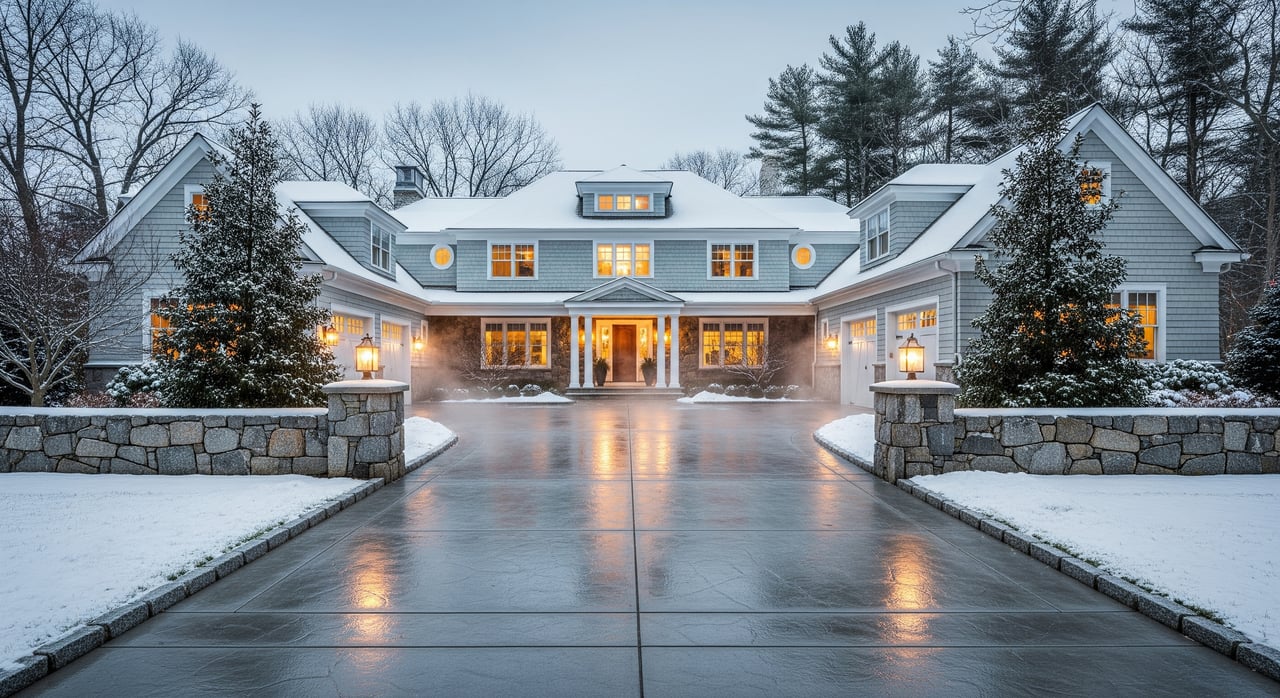
A heated driveway melts snow and ice by warming the pavement surface during storms. Heating elements sit under concrete, asphalt, or pavers and turn on automatically when sensors detect moisture and cold. Proper drainage still matters because heat will not remove standing water.
- Electric systems use heating cables or mats controlled by sensors and a thermostat. The system energizes on cue and produces heat directly in the pavement.
- Hydronic systems circulate hot water from a boiler through PEX tubing under the surface. Heat transfers from the water into the pavement.
For both types, automatic snow and temperature sensors help you avoid unnecessary run time and improve reliability.
Electric vs. hydronic: choose wisely
Electric snow-melt systems are simpler. They typically include heat cables or pre-wired mats, a control unit, and a dedicated electrical connection. Installers often design electric systems in the range of about 20 to 60 watts per square foot based on climate and exposure. For design context and product options, review industry guides from WarmlyYours and education resources from the Radiant Professionals Alliance.
- Pros: straightforward installation, compact equipment, good for smaller areas like steps, short driveways, and walks.
- Cons: electricity can be a costly energy source for large areas and you may need an electrical service upgrade.
Hydronic systems use a boiler or other heat source, pumps, a manifold, and tubing loops. Designers size hydronic systems to deliver comparable heat per square foot to electric systems.
- Pros: better fit for larger areas thanks to fuel cost advantages with efficient boilers, more control over water temperature and zones, and potential tie-in to a home’s hydronic system.
- Cons: higher mechanical complexity, more invasive to retrofit, and routine service needs for boilers and pumps.
Installation costs in Metro West
Installed costs vary with driveway size, pavement type, access, and whether you are replacing the surface. Published ranges on consumer and trade sites indicate:
- Electric systems: commonly priced from several dollars up to $20+ per square foot depending on complexity, coverage, and whether you are already repaving.
- Hydronic systems: often higher up front for small areas because of boiler and mechanical costs, but more economical per square foot on larger driveways.
Use these ranges as context only. Local quotes are the only accurate numbers. For additional background on cost factors, you can review consumer cost resources such as Angi and HomeAdvisor.
Operating cost: quick math you can use
You can estimate electric operating cost in four steps:
- Choose a design heat density from your installer, for example 40 watts per square foot.
- Multiply by area to get system power. A 500 square foot driveway at 40 watts per square foot equals 20,000 watts or 20 kW.
- Estimate run time per winter. If you assume 2 hours per snow event and 15 events, you get 30 hours.
- Multiply 20 kW by 30 hours for 600 kWh. At an illustrative $0.25 per kWh, that is about $150 per season.
If you double the area to 1,000 square feet using the same assumptions, the seasonal energy use and cost roughly double. Actual hours vary with storm frequency and intensity. To check current Massachusetts electricity prices, use the U.S. Energy Information Administration’s state energy pages.
Hydronic costs depend on fuel type and boiler efficiency. Designers work in BTU per hour per square foot, then convert to fuel units like therms or gallons. A newer condensing boiler can reduce fuel use compared to older equipment. Your installer can provide a fuel-use estimate using the same run-time approach.
Maintenance and lifespan
- Electric cables or mats commonly last 20 to 30 years or more when properly installed, with controls often replaced sooner. Plan a quick control and sensor check before winter.
- Hydronic PEX tubing has a long expected life under pavement when installed to standard practice. Boilers, pumps, and valves typically need regular service and may be replaced in 10 to 20 years. Include annual service, antifreeze checks if used, and a preseason start-up test.
Pavement work matters too. Saw-cutting or repairs can damage hidden heating elements, so keep documentation and follow the installer’s guidance to protect warranties.
Site and permits in Metro West
Metro West winters bring regular snow events and freeze–thaw cycles. Automatic melting helps reduce salting, shoveling, and slip risk. To plan correctly for Wayland, Weston, Wellesley, and the Cambridge–Newton–Framingham corridor, consider:
- Pavement and timing: New construction is the most cost-effective moment to install a system. Retrofitting usually requires removing and replacing pavement. Concrete, asphalt, and pavers all work, but details differ.
- Drainage and grade: Heating reduces ice formation, but you still need proper slope and drainage.
- Space and utilities: Electric systems may require a service upgrade. Hydronic systems need space for a boiler and manifolds, or coordination with your existing system.
- Permits and inspections: Expect electrical permits for electric systems and plumbing or mechanical permits for hydronic work. Many towns also require building or driveway permits for pavement replacement. Contact your municipal building or inspectional services office early in the process.
- Incentives: While incentives rarely apply to driveway elements, high-efficiency boilers and controls may qualify under Mass Save.
For climate context and to set expectations about seasonal snowfall, you can review local climate normals from NOAA’s NCEI.
Resale impact and ROI
A heated driveway is viewed as a desirable comfort feature in cold-climate, high-end neighborhoods. In markets like Wayland, Weston, and Wellesley, it can enhance appeal when homes already include premium finishes and outdoor improvements. That said, hard dollar-for-dollar ROI data is limited because snow-melt systems are not tracked as a standard category in national remodeling ROI studies.
What improves resale impact:
- A high-end setting where buyers expect luxury amenities.
- Clear documentation, permits, and service records.
- Homes where reduced maintenance and safety are priorities.
What can reduce impact:
- Buyers focused on energy use or operating costs.
- Poor documentation or unclear permitting.
If you plan to sell soon, weigh the convenience and safety benefits you will enjoy against the uncertain payback. If you plan to own the home for many winters, value from convenience and reduced liability often carries more weight.
Decision framework: find your answer
Ask yourself these questions before you solicit bids:
- How many storms typically require clearing, and how much time or cost do you spend each winter?
- What is your driveway area in square feet? Electric fits smaller areas well, while hydronic is often better for larger surfaces.
- Are you already planning to replace or resurface the driveway?
- Do you have adequate electrical service, or will you need an upgrade?
- Could a hydronic system tie into your existing boiler, and do you have room for equipment?
- What are your local energy prices and your preference for lower up-front cost versus lower operating cost? Check the EIA state pages for current price context.
- What do your town’s permits require, and are there any historic or conservation constraints?
- How long do you expect to keep the home?
Then compare payback informally:
- Estimate seasonal operating cost using the method above and compare it to plowing, salting, and your time.
- Consider non-monetary benefits like reduced slip risk, less salt, and better winter access.
Alternatives to consider
- Heat only what you use most: steps, a walkway, or a short heated apron near the garage or street.
- Use portable heated mats for key footpaths.
- Improve driveway grading and drainage to reduce icing.
- Keep a reliable plow contract and treat high-risk spots only.
Bid-ready checklist
Before you call installers:
- Measure driveway area and note pavement type. Decide if you want full coverage or targeted zones.
- Gather recent electric and fuel bills and confirm your current electrical service capacity.
- Check your town’s permit requirements and any curb or apron rules.
- Ask each contractor for:
- Local references and photos of completed projects.
- Design heat-density assumptions and expected seasonal run hours.
- Peak electrical demand and zone or staging recommendations.
- Detailed warranties for cables or tubing, controls, and labor, plus documentation for future pavement work.
- Maintenance plan and service intervals.
- A written scope that separates pavement, mechanical or electrical, and permits.
- Get two to three detailed bids and verify licensing and insurance.
For additional technical context, you can review product and design information from WarmlyYours and industry education at the Radiant Professionals Alliance.
Bottom line
A heated driveway can be a smart comfort upgrade in Metro West, especially if you are already repaving or you want safer, lower-effort winter access. Electric systems shine for small areas with simpler installs, while hydronic systems often win on larger surfaces due to operating cost advantages. Your best next step is to size your area, check your utilities, and compare two or three local bids using the framework above.
If you would like help deciding what will resonate with local buyers or how a heated driveway fits into your sale or renovation plan, reach out to Taylor Yates for a complimentary concierge consultation.
FAQs
How do electric heated driveways work?
- Electric cables or mats under the pavement heat up when sensors detect snow and cold, melting accumulation automatically.
How do hydronic heated driveways work?
- A boiler heats water that circulates through PEX tubing beneath the surface, transferring heat into the driveway to melt snow and ice.
What does a heated driveway cost to install?
- Published ranges vary, but sources indicate several dollars up to $20+ per square foot depending on type, size, and whether you are repaving; local quotes are essential.
How can I estimate operating cost in Massachusetts?
- Multiply design watts per square foot by area for kW, estimate seasonal run hours, then multiply by local $/kWh; check the EIA’s state data for price context.
Do I need permits in Wayland, Newton, or Wellesley?
- Expect electrical permits for electric systems, plumbing or mechanical for hydronic, and often building or driveway permits for pavement work; confirm with your town.
Will a heated driveway boost resale value?
- It can enhance appeal in high-end neighborhoods, but hard ROI data is limited; documentation, permits, and maintenance records help buyers feel confident.
Are there incentives for hydronic systems?
- The driveway itself is unlikely to qualify, but efficient boilers or controls may be eligible under Mass Save.